


7 min read · Updated: 2026-10-05
Readers want clear, practical guidance on financing solar energy at home. This guide walks through how to assess loan options, estimate costs, and choose a path that fits long-term finances. You’ll learn concrete steps to compare APRs, fees, and repayment terms while avoiding common mistakes.
You’ll also see how to balance upfront payments with long-term savings, and when grants or tax credits may influence the total cost. The aim is a financial plan you can implement this month, not vague optimism.
By the end, you’ll have a concrete checklist for evaluating lenders, calculating monthly payments, and weighing ownership versus leases or power purchase agreements. The focus stays on practical questions you can answer with your own numbers.
- Plan your solar purchase with a clear loan comparison that covers rate, term, and fees.
- Estimate monthly payments with a consistent method to compare offers fairly.
- Include incentives and ownership in the math to understand true cost and payoff.
- Use a simple checklist to vet lenders, installers, and contract terms.
Basics of solar financing
Understanding loan types
Choosing the right loan type shapes total cost and monthly payments. Secured loans often offer lower rates but require collateral, while unsecured loans rely on credit. Consider how long you plan to stay in the home and the system’s expected life when deciding. Buharkent güneş enerjisi sistemi fiyatları
Compare fixed and variable rates to see total interest exposure. A fixed-rate loan provides predictability even if rates rise, which matters for budgeting.
If you’re unsure, run a simple scenario: a short-term loan may save interest with a fast payoff, but a longer loan lowers monthly costs at the expense of total interest.
- Fixed-rate predictability matters for budgeting
- Understand total interest over the term
- Check if early payoff is allowed
- Match loan term to system lifespan
- Confirm any origination fees
Evaluating the cost picture
Estimate upfront costs, ongoing maintenance, and expected energy savings to gauge affordability. Use a simple cash flow model that compares expenditures with and without financing.
Account for potential increases in electricity rates, which improve the value of solar savings over time.
Check whether the lender requires an appraisal or a specific installer network which could affect timing and costs.
- Calculate net present value of the project
- Factor in maintenance and insurance
- Include potential incentives in your model
- Be aware of appraisal or installation requirements
- Review annual escalation of energy savings
Putting numbers to the plan

Estimating monthly payments
Plug your loan amount, interest rate, and term into a basic calculator to see monthly outlays. Don’t forget taxes, insurance, and potential HOA fees if applicable.
Set aside a cushion for maintenance or panels replacement after mid-life. That buffer keeps your monthly payments realistic.
Compare offers with the same loan amount and term to isolate the effect of rate and fees on monthly cost.
- Use equal loan terms for apples-to-apples comparison
- Add a maintenance reserve to your budget
- Check for prepayment penalties
- Exclude optional add-ons that raise cost without clear benefit
Role of incentives and ownership
Owning the system typically yields greater long-term value than renting. Understand how tax credits or utility incentives affect your net cost.
Leasing or PPA arrangements shift some risk and responsibility to the provider, but may leave you with higher long-term costs.
Review the contract’s terms to see who benefits if system performance falls short of expectations.
- Ownership usually lowers long-term cost
- PPAs shift risk but can raise total payments
- Incentives reduce upfront burden
- Read performance guarantees carefully
Choosing between loan options
Fixed vs variable rates in practice
Fixed-rate loans provide steady payments and easier budgeting, especially when rates rise. Variable rates can be tempting if you expect rates to fall or stay low for a while.
Evaluate the risk you can tolerate. A small rate uptick over ten years can add up to a noticeable extra cost.
Ask lenders about rate caps and how often rates can adjust.
- Fixed offers predictability
- Variable may save money if rates stay low
- Check caps to limit payment shocks
- Understand how adjustments occur
| Method | Pros | Cons |
|---|---|---|
| Ownership | Long-term savings, builds home value | Higher upfront cost, responsibility for maintenance |
| Lease/PPAs | Lower upfront, easier budgeting | Higher total cost, limited ownership benefits |
| Hybrid financing | Balanced upfront and ownership flexibility | Complex terms, mixed incentives |
Comparing lenders and terms
Collect offers from banks, credit unions, and solar installers that finance the project. Use a standard comparison template to keep terms and fees consistent.
Look beyond the quoted APR to include origination fees, closing costs, and prepayment penalties in your total cost.
Seek clarity on whether warranties, service plans, or installation quality influence the loan terms.
- Standardize offers for easy comparison
- Include all fees in total cost
- Consider service and warranty value
- Ask about prepayment penalties
Begin with a clear budget that includes installation, permits, and potential upgrades.
Financial planning for solar purchases
Assess budget and return
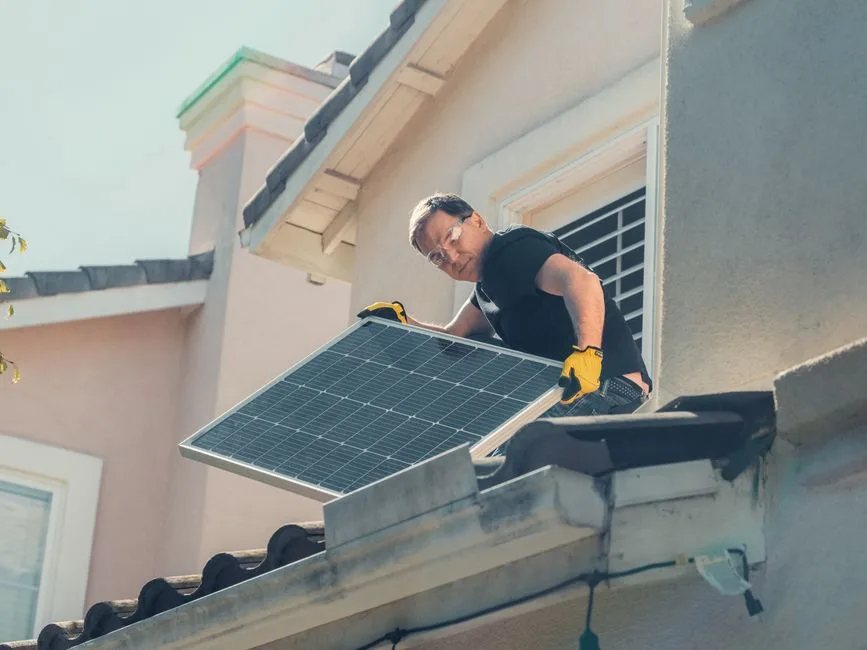
Begin with a clear budget that includes installation, permits, and potential upgrades. Compare loan costs against expected energy savings to gauge payback time. Use a rough projection of annual savings to see if the plan fits your financial goals.
- Define max monthly payment
- Get two loan quotes
- Verify permits and interconnection
- Set a realistic installation timeline
Next, identify tradeoffs between cash purchases and financing. A loan keeps liquidity, but adds interest costs; paying upfront reduces debt but ties up cash. Consider a conservative cushion for repairs and maintenance.
Finalize a plan by mapping timing to energy needs and loan disbursement. Align project start with favorable weather and utility interconnection windows. Confirm your monthly payment aligns with existing budget constraints.
- Set a hard monthly cap for loan payments
- Estimate total loan cost including fees
- Build a simple cash-flow forecast
- Plan for potential rate changes
Verifying installer credibility
Check licensure and insurance
Verify the installer holds appropriate licenses for your area and provides proof of insurance. A license ensures compliance with local rules, while insurance protects you from liability during the job. Request a copy of both before any signed agreement.
Look for a permanent business address and a physical storefront or office. This reduces the risk of a disappearing contractor after installation. Confirm their workers’ compensation and liability coverage.
Ask about project management, warranties, and after-sale service. A solid plan includes a clear timeline, on-site supervision, and written warranties for panels and inverters. Ensure you know who to contact for maintenance questions.
- License status verified
- Insurance documentation received
- Transparent warranty terms
- Clear contact point for service
Alternative funding routes

Credit union and personal loans
Credit unions can offer competitive rates to members with good standing. Compare terms, fees, and prepayment options to find the best fit for a solar project. Beware of added charges if you pay the loan early.
Consider a personal loan if you don’t want to tie the project to a mortgage. Personal loans may have higher rates but simpler terms. Use a fixed rate with a clear payoff date to avoid payment surprises.
Evaluate a home improvement loan if you plan to add efficiency upgrades. Bundling improvements can simplify financing and potentially improve the overall value of your home.
- Compare loan terms
- Check prepayment penalties
- Ask about origination fees
- Assess total cost over the life of the loan
Tax incentives and programs
Understand incentives and eligibility
Tax incentives can reduce net cost but eligibility rules vary by location and program. Start by confirming whether credits apply to equipment, installation, or both. Keep records of purchase dates, receipts, and contractor details.
Some programs require system commissioning within a set window. Plan the installation date to ensure you meet the deadline and maximize the benefit. Maintain copies of all documentation for future claims.
Evaluate whether incentives affect your financing terms. Some lenders adjust terms based on the net cost after credits. Run two scenarios to see the effect on monthly payments and total costs.
- Identify applicable credits
- Track deadlines
- Keep documentation organized
- Understand lender adjustments
Frequently asked questions
Can I combine solar with other energy upgrades in one loan?
Yes. Financing multiple improvements under one loan can simplify management and sometimes reduce costs. Compare the combined estimated energy impact and ensure the total monthly payment stays within your budget.
What should I look for in a solar loan agreement?
Look for fixed vs variable rate terms, total interest, any origination fees, prepayment penalties, and the timeline for disbursement. A clear payoff schedule helps you avoid surprises if rates rise.
Are there programs that help renters finance solar?
Renters generally have fewer financing options, but some programs support energy-efficiency upgrades through efficiency loans or landlord-funded installations. Check local programs and speak with your landlord about shared benefits.
How long before I see savings from solar?
Most households begin noticing energy-cost reductions after installation, with the exact timing depending on usage, incentives, and system performance. Keep a detailed energy bill before and after to confirm the impact.
Closing thoughts on solar financing
The practical path to solar is a well-structured plan that blends budget discipline with credible installation and a clear view of incentives. Use a simple cash-flow model to compare loan terms and watch for hidden fees that creep into contracts. The goal is a predictable monthly payment that aligns with your finances.
Take the time to verify the installer, confirm warranties, and map out the interconnection process. A solid contractor and a reliable utility coordination plan reduce risks and speed up savings. Use this framework to keep the project on track and financially sane.
For more insights on this topic, you might find Spar penge med sol: praktisk tjekliste particularly informative.
You may also find Understanding Köşk güneş enerjili sulama pompası: helpful as it covers related aspects of this subject.
If you enjoyed this article, we recommend checking out Personal finance guide to solar systems for further reading.